You love the rug. You love the lamp. You love the curtains. But put them together and somehow the room feels off.
A mood board fixes that. It’s one page that shows your colors, materials, and key pieces side by side, so you can see whether they work together before you pay for them.
Disclosure: this post contains affiliate links. If you click one and make a purchase, I may earn a commission at no extra cost to you.
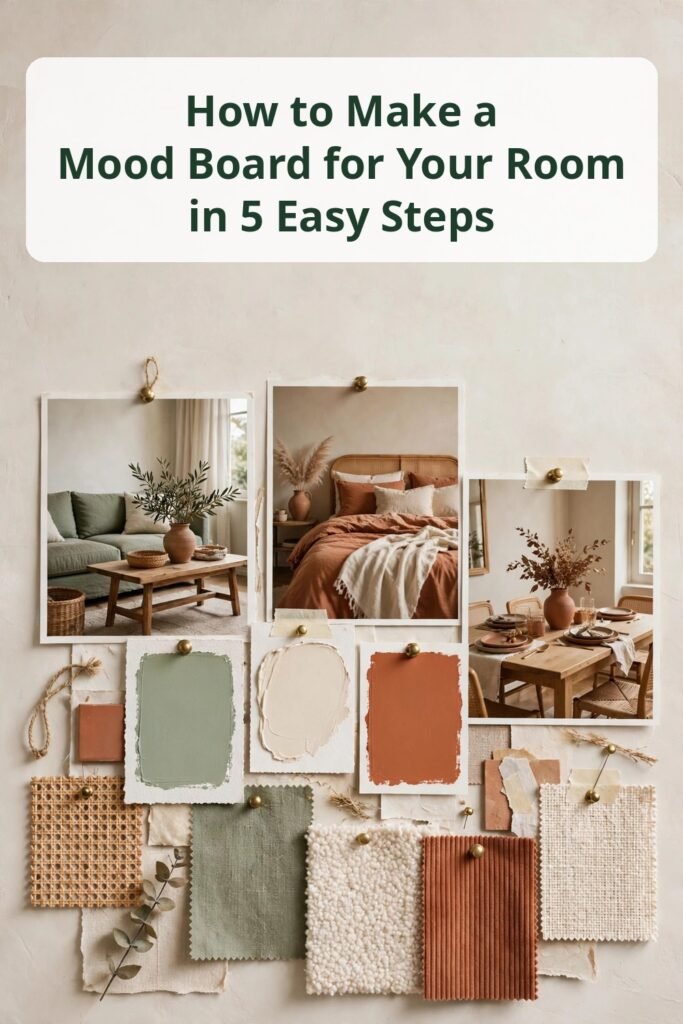
What is a mood board?
A mood board is a collage of the things that define the look of a room: a color palette, textures, furniture, lighting, and a few inspiration photos. It’s not a final design. It’s a quick way to decide what belongs and what doesn’t.
Why bother?
- It stops impulse buys. If an item doesn’t fit the board, it doesn’t go in the cart.
- It makes your style clear. Seeing 10 images together shows you what you keep choosing.
- It makes shopping faster. You know your colors and materials, so you compare less.
- It helps you explain your taste to a partner, a roommate, or a designer.
Step 1: Collect inspiration (20 minutes)
Save 15 to 25 images of rooms or details you like. Pinterest is great for this, and so are magazines and photos you take yourself.
Don’t overthink it. Save fast, and edit later.
Step 2: Find the pattern
Look at everything you saved and ask:
- Which colors keep showing up?
- Which materials do I like (wood, linen, metal, glass)?
- Is the mood calm, cozy, bright, or bold?
- What do I never see in these images? (Often just as useful.)
Write down three words that describe the look, for example “warm, simple, natural.”
Step 3: Choose a palette
Pick three to five colors:
- A base color for walls and large pieces (often a soft neutral)
- One or two supporting colors for textiles and furniture
- An accent color for small touches like pillows, art, or a vase
A common guideline is roughly 60% base, 30% supporting, and 10% accent. It’s a starting point, not a rule.
Step 4: Build the board
You don’t need special software.
- Free design tools such as Canva have mood board templates.
- A slide or a document works fine: paste images, add color swatches, and label them.
- Paper and scissors are great if you like working by hand.
Include:
- 3–5 color swatches
- Your main furniture pieces (or similar ones)
- A texture sample (fabric, wood, metal)
- Lighting
- 2–3 inspiration images
- A few notes: your three words, and your must-haves
Step 5: Test and edit
Look at the board for a day. Then ask:
- Do the pieces feel like they belong together?
- Is there one clear focal point?
- Is there too much of one color, or no contrast at all?
- Would it work in your room’s light and size?
Remove anything that doesn’t fit. A good board usually gets smaller as you edit it.
Common mistakes
- Too many colors. More than five and the board looks busy.
- Ignoring scale. Check real measurements. (See our guide to planning your room layout before you buy.)
- Copying a whole room photo. Take the idea, not the exact items.
- Skipping texture. A room with only flat surfaces feels cold, even with the right colors.
Seasonal boards are easy practice
A holiday mood board is a low-stakes way to try the method. Our Christmas apartment decor ideas for small spaces are a good starting point for one.
When to get help
You can do this on your own. But some situations are easier with a second opinion:
- You have too many ideas and can’t narrow them down.
- You’re furnishing a whole home and want it to feel consistent.
- You’d like a polished board or 3D image you can show to a partner or contractor.
- You’ve tried a few times and still feel stuck.
Freelance marketplaces such as Fiverr list independent designers who offer mood boards, style consultations, and room layouts. Quality and prices vary, so:
- Look at portfolios that match your style.
- Read recent reviews from buyers with similar projects.
- Check what’s included: number of revisions, file formats, and delivery time.
Browse mood board and interior design services on Fiverr →
What to send a designer
- 5–10 inspiration images
- Photos of your room (2–3 angles) and its measurements
- Your three style words
- Budget range
- Items you’re keeping
- Must-haves and deal-breakers
Quick recap
- Save 15–25 inspiration images.
- Find the pattern: colors, materials, mood.
- Pick a palette of 3–5 colors.
- Build a simple one-page board.
- Sleep on it, then edit.
A mood board takes an afternoon. It can save you from a room full of things that don’t match.
Affiliate disclosure: links to Fiverr in this article are affiliate links. I may earn a commission if you make a first purchase through them.